

Ramzi Fawaz
Ramzi Fawaz is a public intellectual.
Ramzi Fawaz an award-winning queer cultural critic, educator, podcaster, and public speaker. He is currently at work on a new book project titled How to Think Like a Multiverse: Psychedelic Lessons for Embracing a Diverse World.
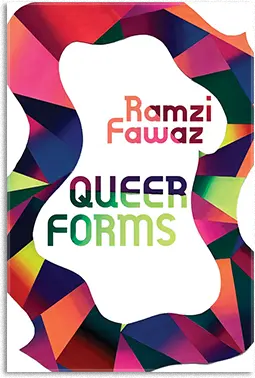
He is a Professor of English at the University of Wisconsin, Madison and host of the podcast Nerd from the Future. Fawaz is the author of two books including The New Mutants: Superheroes and the Radical Imagination of American Comics (2016), and Queer Forms (2022), both published by NYU Press. With Darieck Scott he co-edited the award-winning special issue of American Literature, "Queer about Comics" (2018) and with Deborah E. Whaley and Shelley Streeby he co-edited Keywords for Comics Studies, which was selected as a Choice Outstanding Academic Title for 2022. Fawaz is a contributing editor to Film Quarterly where he authors the column "Imagination Unbound." In it, he explores how contemporary media and popular culture inspire new and surprising democratic political visions in response to increasingly authoritarian times. Fawaz's popular writing on feminist and queer media, American cultural politics, and superhero comics has also appeared in the LA Review of Books's online channels Avidly and The Philosophical Salon. He recently joined Gayle Wald and Aaron Trammell as the new co-editors of NYU Press's Postmillennial Pop Series, which publishes cutting edge scholarship in contemporary popular culture studies.
Fawaz is currently at work on a new book project titled How to Think Like a Multiverse: Psychedelic Lessons for Embracing a Diverse World. In it, he argues for the value of cultivating a uniquely psychedelic imagination in response to difference, diversity, and plurality—or, the simple fact that people are different from one another—as a way to reject the rising tide of xenophobia in our time. He argues for a rethinking of humanities education as a form of collective psychedelic therapy, which uses art, literature, and media, rather than psychoactive medicines, to induce positive, long-term transformations in students’ mental wellbeing.
A beloved instructor at the Esalen Institute, Ramzi’s "Think Like a Multiverse: Pathways to Wonder, Kinship and Radical Openness” workshop introduced participants to a range of alternative models for confronting and embracing diversity, including Gloria Anzaldúa’s mestiza consciousness (a feminist theory of mixed-race identity), the indigenous kinship worldview, and cosmopolitanism and radical democracy. Each day combined open discussion of these various frameworks with a series of practical exercises including: communing with Esalen’s verdant plant-life, enacting deliberative democratic group debate, and talking to strangers. These activities strengthened participant’s skills in encountering and responding to differences with curiosity and good judgement, rather than fear, suspicion or anxiety.
“[Ramzi shares] the idea that pluralism, true radical pluralism, begins by accepting that you will be changed productively by contact with people who are radically different from you. I think you'll find Ramsay bold, funny, passionate about teaching, and deeply attuned to this moment that we're all living through.”
—Sam Stern, Esalen Institute

Azura Says
“As a former Fawaz student, he actually did change my life.”
Expertise
- Models embracing contradiction, diversity, and the flexibility to change our minds
- A radical humanist scholar and theorist on pop culture, comics, and history and potentials of queer feminism
- Researches the dual power of psychedelics and education to expand our wellbeing
- A luminary voice in humanities bridging academia and the public square
Video Highlight

“You Were Never Just One Thing” —Ramzi Fawaz and the Queer Potential of Now”